


What Hides Do Geckos Need?

A beginner-friendly guide to gecko hides, leopard gecko tank setup, and building a calm reptile habitat (without overthinking it)
If you’re setting up your first gecko enclosure, hides are usually one of the first things you add—and one of the easiest things to get wrong.
A well-planned reptile habitat doesn’t need to be complicated, but it does need to feel safe.
Too many?
Too big?
Too decorative but never used?
Don’t worry.
This guide is written for beginners, not experts—and by the end, you’ll know exactly what your gecko needs to feel safe and settled.
First Things First: Why Do Geckos Hide So Much?
Short answer: because they’re supposed to.
Geckos aren’t pets that want to be seen all the time.
They feel safest when they know they can disappear whenever they want.
A gecko that hides often is usually:
- Relaxed
- Comfortable
- Not stressed
So if your gecko goes straight into a hide after being introduced to its new home—good news. That’s a healthy response.
The Beginner Rule: Start with 2–3 Hides
If you’re just starting out, don’t aim for perfection. Aim for coverage.
A simple beginner setup usually includes:
1. One main hide for resting
This is your gecko’s “go-to” spot.
It should feel enclosed, shaded, and quiet.
Ground-dwelling geckos like the Leopard Gecko tend to love low, cave-style hides that feel snug and secure.
In a typical leopard gecko tank setup, this main hide often becomes the place they return to again and again.
👉Tip: If your gecko can fully tuck itself inside and feel hidden, you’re on the right track.
2. One hide closer to warmth
Geckos like warmth—but not exposure.
A hide placed on the warmer side of the enclosure lets your gecko:
- Stay comfortable
- Digest properly
- Still feel protected
This is often where you’ll find your gecko resting after meals.
3. (Optional but recommended) A slightly humid hide
For beginners, this doesn’t need to be complicated.
A hide with a bit of moisture inside helps during shedding and gives your gecko another comfort option. Many geckos naturally seek these spots when they need them. 
What Kind of Hides Should Beginners Choose?
When you’re new, it’s tempting to buy the biggest or most eye-catching hide.
But geckos usually prefer hides that are:
- Smaller than you expect
- More enclosed than open
- Natural-looking rather than flashy
This is where simple, natural-style hides really shine.
At WildPalz, our hides collection focuses on:
- Soft, cave-like shapes
- Natural textures inspired by rock and bark
- Designs that blend into the enclosure instead of standing out
They’re beginner-friendly because they work—even if you’re still learning.
“My Gecko Never Uses That Hide” — Is That Normal?
Yes. Completely.
Most geckos will:
- Pick one favorite hide
- Ignore others for weeks
- Suddenly switch preferences one day
That doesn’t mean the unused hide was a bad choice.
It just means your gecko likes having options.
As long as your gecko:
- Eats normally
- Moves between areas
- Looks healthy
You’re doing just fine.
What About Tree-Climbing Geckos?
If you’re keeping a species like the Crested Gecko, hides don’t always look like caves.
In these setups, leaves and elevated cover are often just as important as solid hides.
They might be:
- Tucked among leaves
- Mounted slightly higher
- Part of a plant-style setup
The idea is the same: a place to retreat, just off the ground.
Many beginner setups work best when hides are mixed with foliage or decor so the enclosure feels layered, not empty.
Leaves and Plants Count as Hides Too
Here’s something many beginners don’t realize:
not every hide has to be a solid cave.
Large artificial leaves and plant décor create soft hiding zones—places to rest under, tuck behind, or move through without feeling exposed. These are especially helpful for filling empty space and making the enclosure feel less “open.”
Tree-loving species like the Crested Gecko often prefer this kind of cover, especially when leaves are layered at different heights.
“My Gecko Only Uses One Hide”—Is That Normal?
Yes. Completely normal.
Most geckos will:
- Pick one favorite hide
- Ignore others for weeks
- Suddenly switch spots one day
Unused doesn’t mean unnecessary.
It just means your gecko likes having options.
As long as your gecko is eating, moving around, and looks healthy, you’re doing fine.
Beginner Mistakes to Avoid (Quick List)
❌ Only adding one hide
❌ Choosing hides that are too open
❌ Prioritizing looks over comfort
❌ Assuming hiding means something is wrong
If you avoid these, you’re already ahead of the curve.
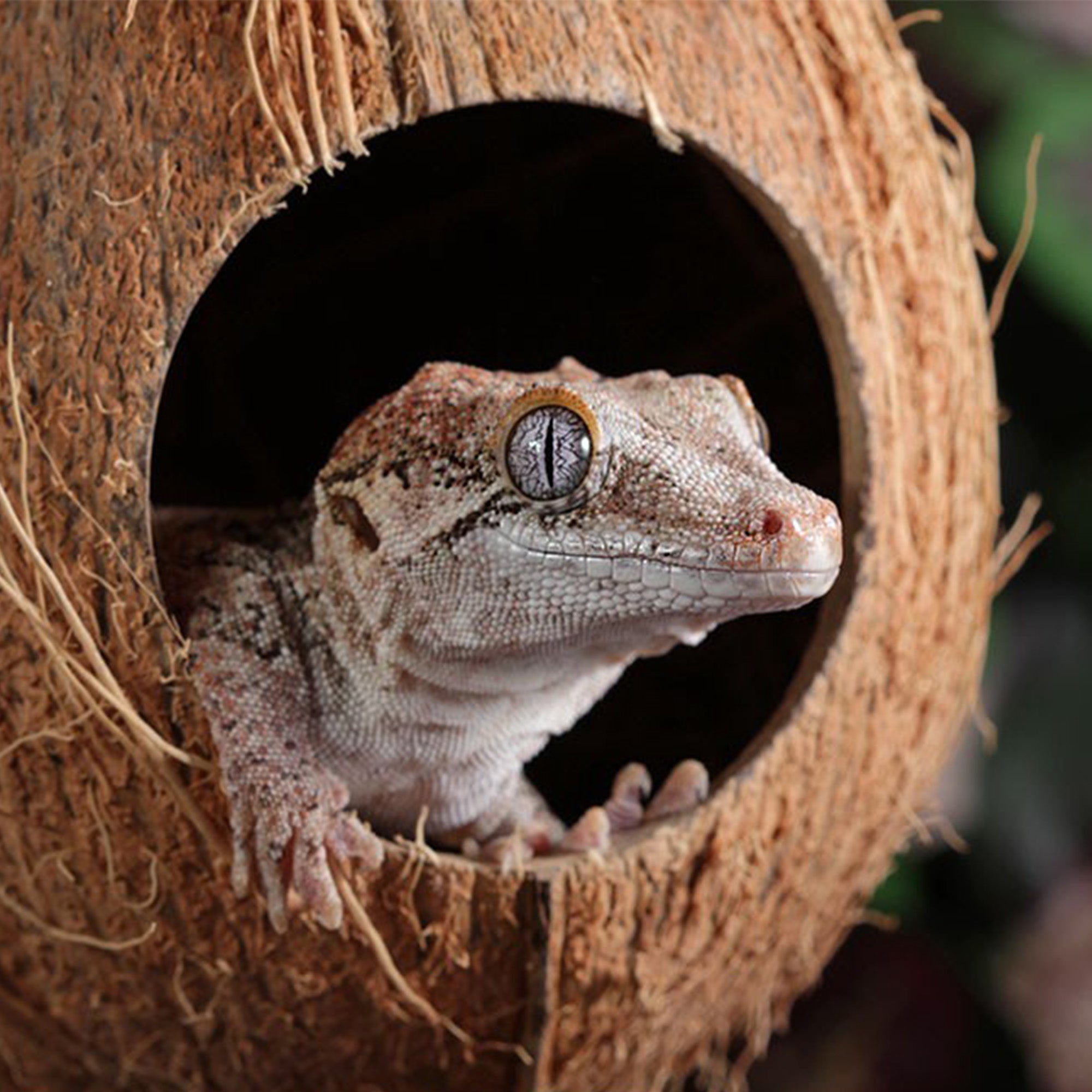 A Calm Way to Think About It
You don’t need a perfect setup to start—just a few thoughtful hides and some simple gecko tank decor to soften the space.
When your reptile habitat feels calm, your gecko will too.
You just need to give your gecko:
- Somewhere to rest
- Somewhere to feel hidden
- Somewhere to choose from
Good hides don’t make geckos vanish.
They make them feel safe enough to come out—on their own time.
And that’s the goal of any beginner setup:
less stress, more calm, and a tiny home that feels right.
If you’re still building your enclosure and want hides that are easy to use, natural-looking, and beginner-approved, you can browse our collection anytime at WildPalz—thoughtfully chosen for small companions who value quiet comfort.


